How to wash a pashmina at home
Cool water, a mild wool wash, no wringing and no sun. Which shawls are safe to wash by hand, which belong with a dry cleaner, and how to keep moths away.
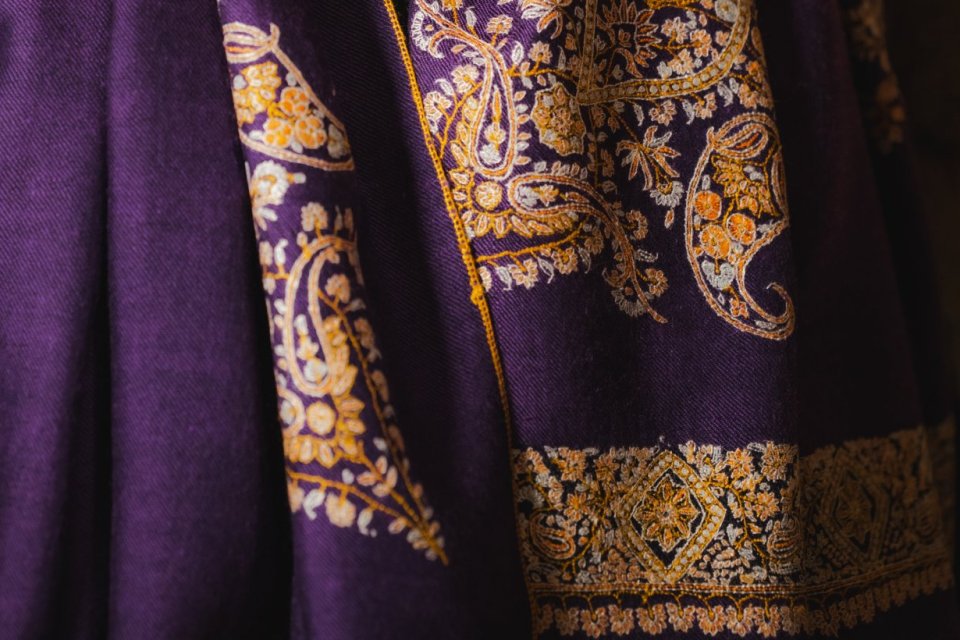
A plain pashmina can be washed by hand at home. Use cool or lukewarm water and a mild wool wash, wash it quickly rather than leaving it to soak, rinse it, press the water out without wringing and dry it flat, away from the sun. The things that ruin a pashmina are heat and rubbing. Warmth and water lift the tiny scales on each fibre, and rubbing locks them together into felt, which does not come undone.
First, decide whether to wash it at all
Hand washing suits a plain shawl in a single colour. Be more careful with anything that has a lot of dyed thread in it. Embroidered Sozni uses silk or viscose thread, a Kani shawl is woven from many dyed yarns, and printed or silk-blend pieces have their own quirks. For these, a dry cleaner who handles cashmere is the safer choice. Where a shawl has a care label, follow it. If a piece came from us and you are unsure, write to the workshop before you start.
To check a colour, dampen a hidden corner and press a white cloth against it. If any colour comes off on the cloth, have the piece dry-cleaned.
An old or antique shawl is a different matter. Do not wash it at home. Take it to a textile conservator.
Washing, step by step
- Fill a clean basin with cool to lukewarm water. Never use hot water, which shrinks wool.
- Add a little mild wool wash and swirl it in. Do not use a biological detergent, whose enzymes can damage wool for good, or any bleach that contains chlorine.
- Lay the shawl in the water and press it under gently. Wash it straight away rather than leaving it to soak.
- Move it softly through the water with your hands. Squeeze, do not rub.
- Drain the basin and rinse the shawl in clean water at the same temperature, until the water runs clear. A sudden change of temperature helps wool felt.
- Lift the shawl out in both hands, holding all of its weight, and press the water out against the side of the basin. Do not wring or twist it.
- Lay it on a dry towel, roll the towel up with the shawl inside, and press down on the roll to soak up the rest of the water.
Drying and pressing
Unroll the towel straight away and lay the shawl flat on a fresh dry towel, or on a drying rack in the shade. Ease it gently back into shape while it is damp. Keep it away from direct sun, radiators and heaters, and the tumble dryer.
If it needs pressing once it is dry, set the iron to the wool setting and use steam, or press through a damp cotton cloth. Press lightly and not for long: over-pressing flattens the surface of wool and leaves it shiny.
Small marks and pills
Treat a spill while it is fresh. Sponge it lightly with a clean cloth, working from the edge of the mark towards the centre so it does not spread, and test anything you put on it on a hidden corner first. Oily marks need a solvent rather than water, so take those to a dry cleaner.
Pills, the small balls of fibre that form where a shawl rubs against a bag strap or a coat, can be lifted off with a fabric comb or snipped away carefully with small scissors.
Keeping moths away
Moth larvae feed on wool and silk. They like dark, undisturbed places, and they seldom touch a shawl that is worn and moved about. The risk comes when a piece is put away for a season. The short version of this advice, with care for carpets, is on our care page.
Clean it before you put it away. Washing or dry cleaning removes any eggs, and the traces of sweat that draw moths in. Then make sure it is completely dry, fold it in a cotton bag or acid-free tissue paper, and keep it in a box with a tight lid. A damp shawl shut away in plastic can grow mould. Take it out now and then, unfold it and let the air get to it.
If you do find moths, seal the dry shawl in a plastic bag and leave it in the freezer for a week. At the usual freezer temperature of about minus 18°C, a week kills eggs and larvae. Let it come back to room temperature for a day before you open the bag, so that no water forms on the cloth.
Cedar blocks and lavender bags smell pleasant, but there is little evidence that they keep moths away, and bare wood can stain fabric yellow. Mothballs made with naphthalene have been banned in the UK and the EU since 2008, and they only work at all inside an airtight container.
Sources
Facts checked on 14 October 2026.
- University of Wisconsin-Extension: the science of felting
- University of Minnesota Agricultural Extension Service, 1942: care of clothing
- Aston University, Journal of Biotechnology, 2005: enzymes in detergents and wool
- US Department of Agriculture, Farmers' Bulletin 1474: stain removal from fabrics
- University of Kentucky Cooperative Extension: pressing techniques
- American Institute for Conservation: pilling
- University of Kentucky entomology: clothes moths
- Mississippi State University Extension: clothes moths
- North Carolina Museum of History: how to care for your textiles
- Museums Galleries Scotland: caring for textile collections
- Southwark Council: warning about mothballs